Mini Split Thermostat: What Works and What Usually Does Not
Most mini splits do not use a conventional 24-volt thermostat. Learn how mini split thermostats work, which controllers can help, and what to check before buying.
Reviewed for source quality, practical usefulness, safety boundaries, and affiliate disclosure. Read our editorial policy.
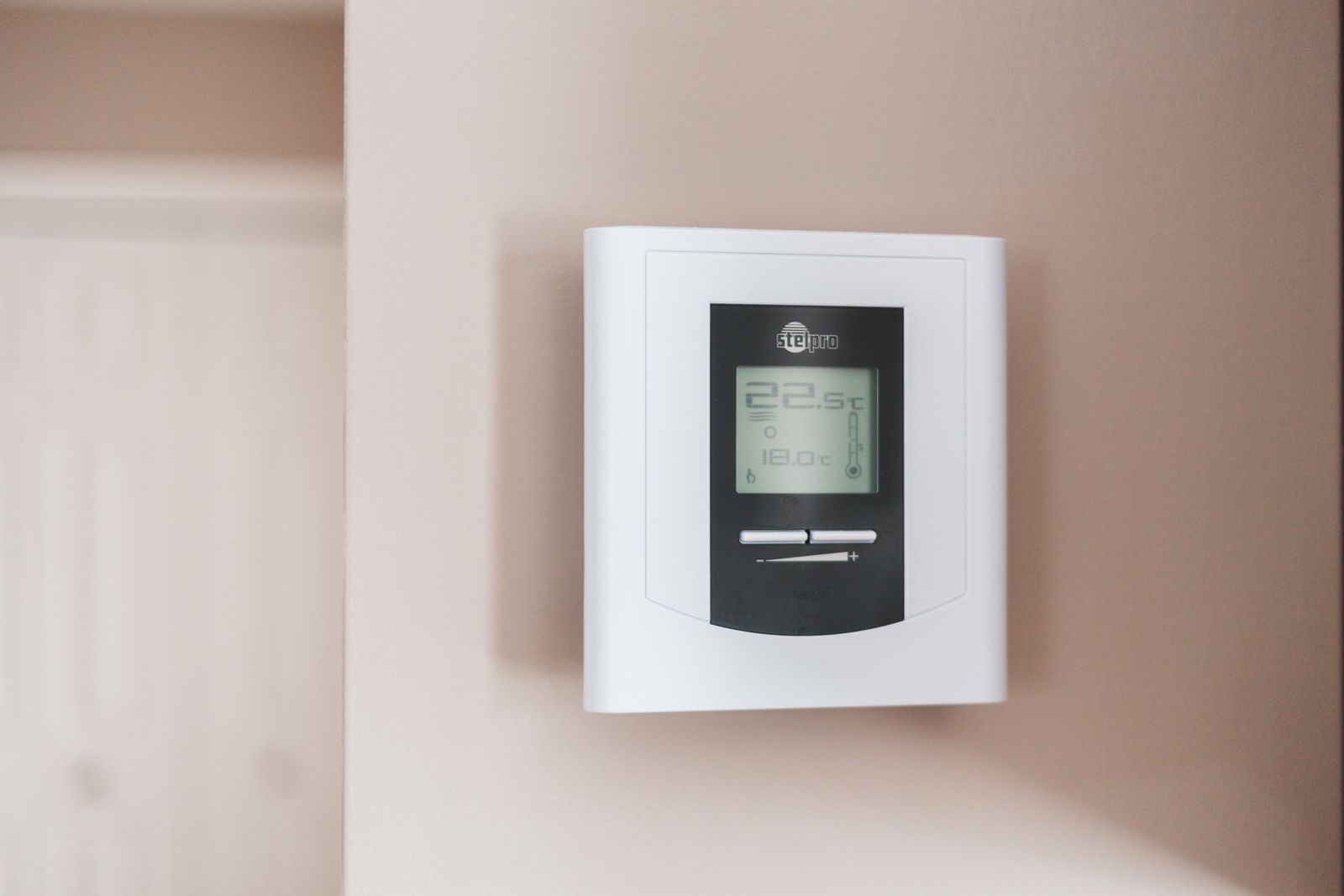
A “mini split thermostat” can mean several different things, and that causes a lot of bad buying advice. Some people mean the factory remote. Others mean a wired wall controller. Others want a Wi-Fi device that controls the unit from a phone.
For most residential wall-mounted mini splits, the important fact is this: the system may not use the same 24-volt thermostat wiring as a conventional furnace or central-air system. The indoor head usually has its own electronics and receives commands from a brand-specific remote.
If you are choosing a product, use the dedicated smart thermostat comparison guide rather than treating every controller as the same. If your main question is app and Wi-Fi control, compare the compatibility checks in the Wi-Fi thermostat guide.
What a mini split thermostat does
A smart mini split thermostat or controller may add:
- app control;
- schedules;
- temperature monitoring;
- geofencing;
- voice-assistant integration;
- automatic mode changes;
- room sensors;
- reminders and usage history.
In many cases, the device sends infrared commands to the indoor head. It is closer to a smart replacement for the remote than to a conventional thermostat connected to R, C, W, Y, and G wires.
Why a regular thermostat may not work
A conventional central HVAC thermostat assumes the equipment accepts low-voltage calls for heating, cooling, fan, or auxiliary heat. A ductless mini split may instead expect a digital command packet from its own remote or wired controller.
That means you should not connect a random Nest, Ecobee, or basic programmable thermostat simply because the wall control looks familiar. Without a compatible interface, the system may not respond, may lose special functions, or may create a wiring and warranty problem.
There are exceptions. Some ductless systems support manufacturer-approved wired controllers, adapters, or interfaces. Those are model-specific decisions. The installation manual and manufacturer compatibility documentation should take priority over a generic thermostat listing.
The three types of mini split thermostat
1. Factory handheld remote
This is the standard control supplied with the unit. It usually handles mode, set temperature, fan speed, vane position, timers, and special features.
Keep it even if you add a smart controller. It is useful for troubleshooting, setup, and recovering control if Wi-Fi fails.
2. Manufacturer wired controller
Some brands offer wired wall controllers for selected indoor units. These can provide a more permanent interface and may expose functions that third-party infrared controllers cannot.
The downside is compatibility. A controller intended for one product family may not work with another indoor-unit series, even within the same brand.
3. Third-party Wi-Fi controller
These devices generally sit in the room and send infrared commands. They are useful when you want app access without changing the mini split’s wiring.
Their limitations include line of sight, remote-protocol support, imperfect state synchronization, and the need for one device per independently controlled indoor head in many homes.
The Sensibo Air is an example of an infrared controller, not a wired thermostat. Check your indoor unit and remote against the manufacturer’s compatibility guide and verify the modes you use before buying. If you need a wired wall controller, start with the indoor unit’s manufacturer instead.
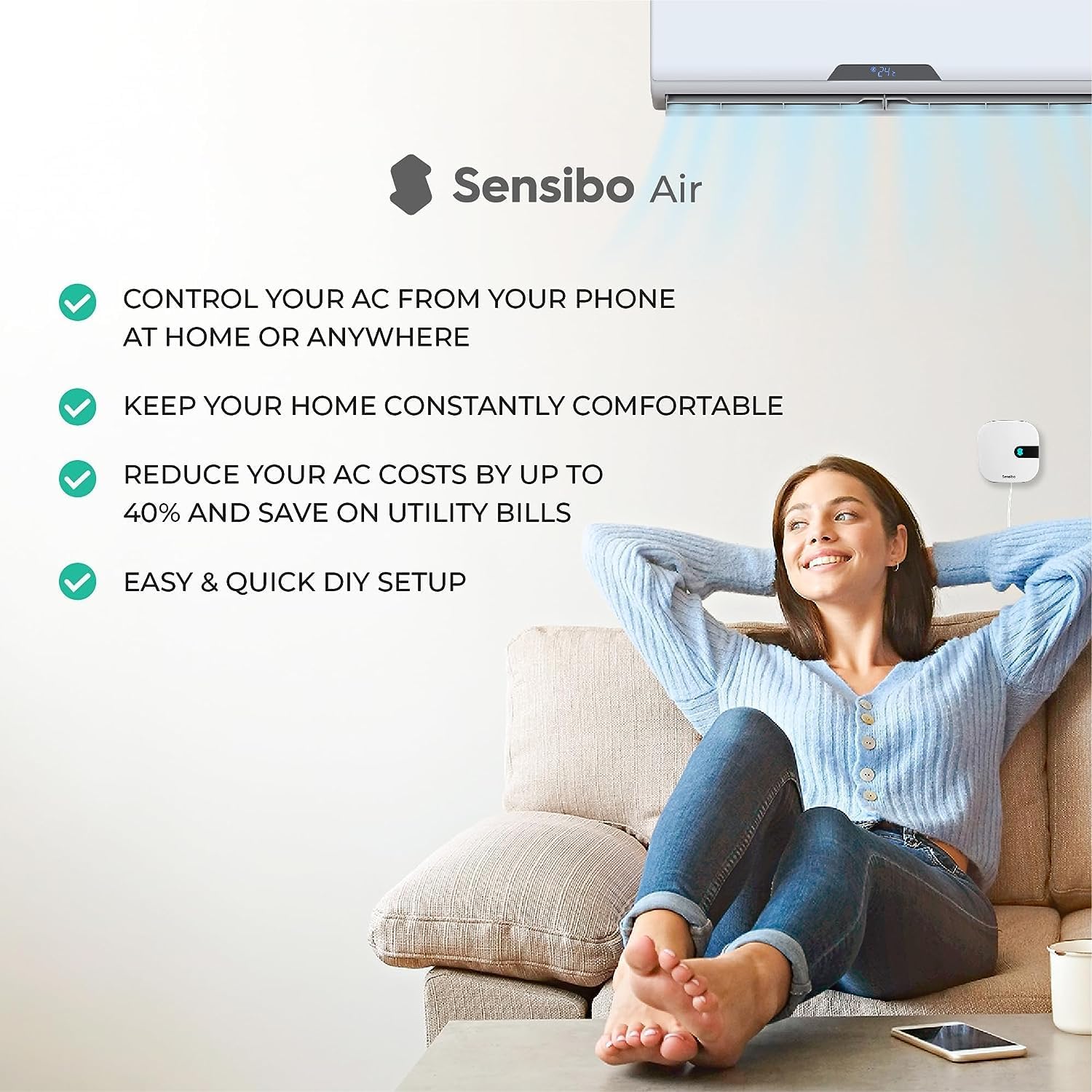 Amazon Recommended product Sensibo Air smart mini split controller Check price on Amazon
How to choose one
Start with the indoor-unit model, not the outdoor-unit marketing name. Then check:
- Does the controller list your exact brand?
- Does it support heat-pump heating as well as cooling?
- Does it support your remote’s display and command style?
- Can it control fan speed and mode changes?
- Will the controller see the indoor head from its final location?
- What happens if someone uses the original remote?
- Does the system continue to work if the internet is down?
- Does a multi-zone setup require one controller per head?
Common mistakes
Buying a 24-volt thermostat because it looks familiar
The appearance of a wall thermostat does not tell you how the mini split communicates. Confirm wiring and interface compatibility first.
Assuming “universal” means every feature works
A controller may turn a unit on and off but fail to expose swing, Dry, Auto, fan-speed, or heat-pump functions. Test the functions you actually need.
Ignoring placement
An infrared controller hidden behind a television or pointed away from the wall unit can behave inconsistently. Plan the location before buying.
Forgetting the sensor location
The indoor head may sense temperature near the ceiling while the controller measures temperature at sofa or bed height. That difference can be useful, but it can also produce cycling or comfort differences if the system is not configured correctly.
When a wired controller is better
A manufacturer wired controller may be preferable when:
- the system is in a commercial or frequently occupied space;
- you need reliable local control without cloud dependence;
- the indoor unit supports advanced scheduling or multi-zone management;
- you need service information that third-party controllers do not expose;
- local code or warranty requirements favor manufacturer equipment.
For a bedroom, home office, or small living area, a compatible Wi-Fi infrared controller may be simpler. For a complex multi-zone installation, ask the installing contractor or manufacturer which controller is supported for the exact indoor-unit series.
Safety and installation boundaries
Do not open electrical compartments or improvise a thermostat connection to solve a compatibility problem. Refrigerant work, high-voltage wiring, control-board changes, and commissioning belong with qualified professionals.
If the unit is not responding, first check the remote batteries, operating mode, breaker status, filter condition, and error indicators. If the problem persists, use the model-specific manual and contact a qualified technician.
The decision in plain language
The best mini split thermostat is not necessarily a Nest-style device. For many ductless systems, the correct choice is a compatible factory wired controller or Wi-Fi infrared controller.
Identify the indoor-unit model, confirm the remote protocol, decide whether you need one controller per head, and keep the original remote available. That approach avoids the most common compatibility mistakes.
A simple compatibility test before buying
If the product page is unclear, use a small decision process instead of guessing from the thermostat shape. Find the exact indoor-unit model and search the controller maker’s compatibility tool. Then compare the functions listed for your remote with the functions you use every week. If you only need temperature and power, a controller may be a good fit. If you rely on vane position, special modes, quiet operation, or detailed schedules, confirm those functions individually.
If you cannot find the exact model, contact the controller manufacturer before ordering. Save the reply and keep the return window open. This is especially important for older systems, imported models, ceiling cassettes, and multi-zone installations.
A useful test after installation is to operate the unit from the smart controller and then from the factory remote. Check Cool, Heat if available, fan speed, setpoint changes, and power-off behavior. If the app and remote disagree, do not assume the indoor unit is broken; the controller may be sending a partial command or reading state imperfectly.
A compatibility worksheet you can take shopping
Fill in these fields before comparing controllers: indoor-unit model, outdoor-unit model, factory remote model, cooling-only or heat-pump system, number of indoor heads, required modes, preferred local controls, Wi-Fi dependency, and return deadline. A product should not be considered compatible until its documentation answers those questions.
If two products both claim compatibility, compare the functions you actually use: Heat, Dry, fan speed, vane position, timer behavior, temperature sensing, and control when the internet is unavailable. That turns a vague “universal” claim into a testable buying decision.
Sources
Frequently Asked Questions
Can I connect a Nest thermostat directly to a mini split?
Usually not directly. A conventional Nest-style thermostat expects low-voltage HVAC wiring, while many wall-mounted mini splits use a proprietary indoor-unit controller and infrared remote. A model-specific interface may exist, but compatibility must be verified.
What is a mini split thermostat actually controlling?
Most smart mini split thermostats act as Wi-Fi-connected infrared controllers. They send commands that resemble the factory remote and may add schedules, room sensing, app control, and automation.
Do I need one thermostat for every mini split head?
Often yes for independent room control. Plan around the indoor heads and the controller’s compatibility rules, not only the number of outdoor condensers.