Buying Guide
Best Smart Thermostats Compatible with Mini Split Systems
The best smart controls for mini splits, why most are IR controllers instead of wired thermostats, and which option fits each setup.
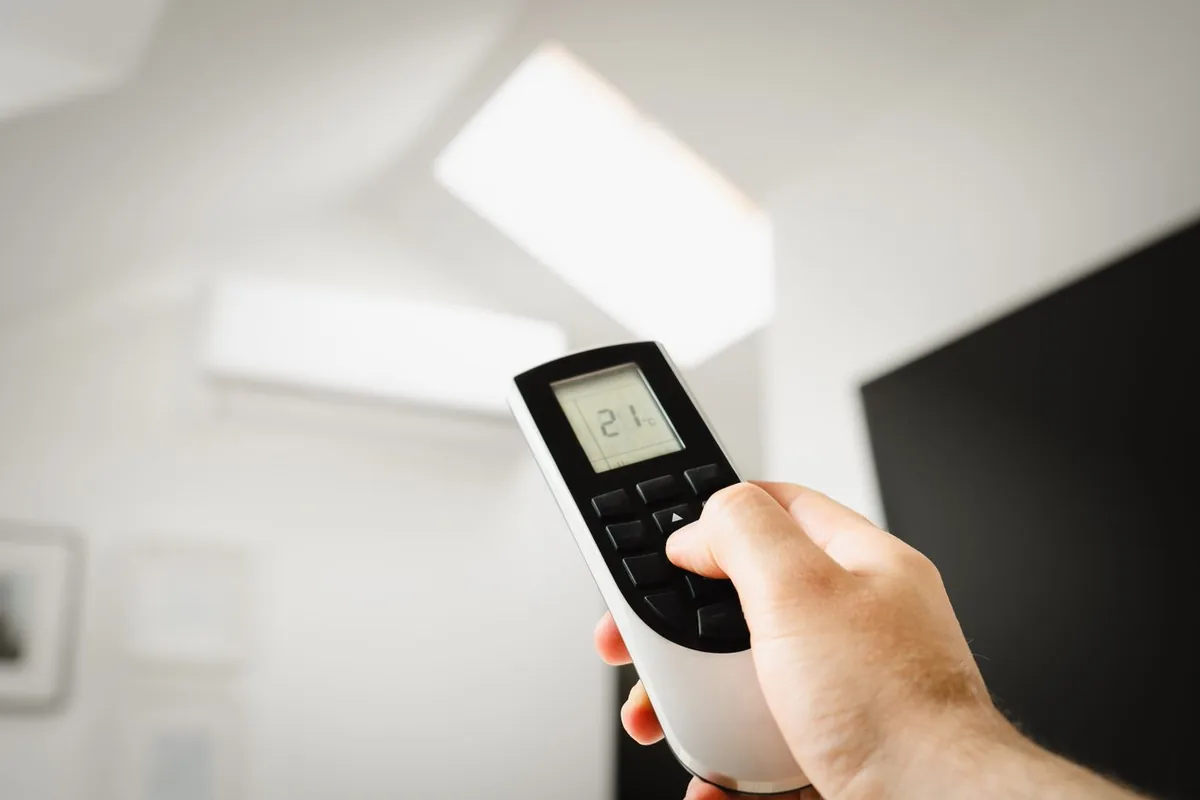
Most mini split owners do not need a conventional wall thermostat. They need a small smart controller that learns or sends the same infrared commands as the factory remote, then adds scheduling, app control, geofencing, voice assistant support, and temperature automation. That distinction matters: a Nest-style thermostat is built around 24V HVAC wiring, while most ductless indoor heads are controlled by proprietary electronics and an infrared handheld remote.
For a typical wall-mounted mini split, the safest buying rule is simple: choose a smart AC / mini split controller that explicitly supports your brand and remote, not a generic smart thermostat that assumes furnace wiring. The best products below are real mini split control devices, but compatibility still depends on your exact indoor unit, remote model, and room layout.
Quick picks
- Best overall for most mini split owners: Sensibo Air, because it has broad IR air-conditioner support and a polished app experience.
- Best compatibility-first choice: Cielo Breez Max, because Cielo’s current guidance says Breez Max can automatically detect a wide range of remote-control protocols.
- Best wall-control feel: Mysa Smart Thermostat for AC and Mini-Splits, because it looks and behaves more like a permanent room thermostat while still controlling the mini split by infrared.
- Best for room-by-room automation experiments: Flair Puck, especially if you also care about room sensing, smart vents, or more advanced home comfort logic.
- Best budget-style option to compare: Sensibo Sky, if you want simpler app control and schedules without paying for every extra feature.
Those are not interchangeable with every ductless system. Before buying, use the manufacturer’s compatibility checker or support page and confirm that your exact mini split brand, indoor unit type, and remote are supported.
Why most mini split “thermostats” are really IR controllers
A ductless mini split indoor head normally receives commands from its own remote: mode, set temperature, fan speed, vane position, timer, and sometimes special functions such as dry mode or eco mode. A smart controller sits in the room, connects to Wi-Fi, and sends infrared commands to the indoor unit.
That creates three practical limits:
- Line of sight matters. If the controller is hidden behind furniture or pointed away from the indoor head, commands can fail.
- The app may not know when someone uses the original remote. Better controllers try to read or sync state, but perfect two-way feedback is not guaranteed on every model.
- One controller usually manages one indoor head. Multi-zone homes often need a controller in each room that has its own wall unit.
This is why a cheap universal remote is not the same thing as a good mini split smart thermostat. You are buying the app, compatibility database, sensor behavior, automation features, and support quality as much as the plastic box.
Comparison table
| Product | Best fit | Control style | Main caution |
|---|---|---|---|
| Sensibo Air | Most homeowners who want app/voice control | IR smart AC controller | Check remote compatibility before buying |
| Cielo Breez Max | Buyers who want broad protocol detection | IR smart AC controller with display/app | Exact feature set can vary by indoor unit |
| Mysa for AC and Mini-Splits | People who want a thermostat-like wall device | IR mini split controller with wall interface | Needs supported IR remote and suitable placement |
| Flair Puck | Room-sensor and smart-home tinkerers | IR controller plus room sensor ecosystem | More setup logic than a basic controller |
| Sensibo Sky | Simpler schedules and app control | IR smart AC controller | Fewer premium features than newer models |
1. Sensibo Air: best overall for most mini split owners
Sensibo’s own compatibility guidance says its products work with air conditioners and heat pumps that use an infrared remote and have a remote display showing settings such as mode, temperature, and fan speed. Sensibo also says its compatibility database covers more than 10,000 models, but you should still check your exact remote before buying. Sensibo compatibility guidance
Sensibo Air is the easiest recommendation for a homeowner who wants smart control without turning the article into a wiring project. It is designed around the way most mini splits are actually used: remote-control commands, app schedules, room temperature readings, and smart-home integrations.
Where it fits well:
- wall-mounted ductless mini splits with a normal IR remote;
- homeowners who want scheduling, app control, and voice assistant support;
- bedrooms, home offices, bonus rooms, and additions where one indoor head serves one space;
- people who want a mainstream product with a mature support base.
Where I would be careful:
- indoor units with unusual remotes or hidden receivers;
- ceiling cassettes where controller placement is awkward;
- homes where family members frequently use the original remote and expect the app to stay perfectly synchronized.
2. Cielo Breez Max: best compatibility-first choice
Cielo says the Breez Max is compatible with systems that use an IR remote, including mini splits, window ACs, portable ACs, cassette ACs, and PTACs. Cielo’s compatibility page also says Breez Max uses auto-detection for more than 20,000 remote-control models and 100-plus brands. Cielo Breez Max compatibility guidance
That makes Breez Max a strong candidate when compatibility is your main worry. It is especially relevant for homeowners who are not sure which remote protocol their mini split uses or who want a controller with an onboard display instead of relying only on a phone.
Where it fits well:
- homes with mainstream mini split brands and standard IR remotes;
- users who like having a visible room controller;
- buyers who want to compare compatibility before opening the box;
- rental units or guest rooms where a simple local display is helpful.
Where I would be careful:
- very old indoor units with incomplete remote functions;
- installations where the controller cannot see the indoor unit’s IR receiver;
- setups where you need manufacturer-specific service diagnostics. A smart controller can change settings, but it does not replace the brand’s service tool.
3. Mysa for AC and Mini-Splits: best wall-control feel
Mysa describes its AC and Mini-Split product as a controller for window, portable, and ductless mini-split air conditioners with remotes. Its product page emphasizes smart control for AC and heat pumps rather than 24V furnace wiring. Mysa AC and Mini-Split product page
The reason to choose Mysa is not that it magically turns a mini split into a central HVAC system. It is that the device feels more like a permanent thermostat than a puck or small tabletop controller. If you dislike loose remotes and want a cleaner wall-mounted control point, Mysa is worth comparing.
Where it fits well:
- homeowners who want a tidy wall-mounted interface;
- rooms where the mini split remote keeps getting lost;
- people who prefer a thermostat-like display over a tiny IR box;
- mini split users who want app control but still want guests to understand the room control quickly.
Where I would be careful:
- apartments where you cannot mount hardware cleanly;
- rooms where the best wall location has poor line of sight to the indoor head;
- systems where your exact remote is not listed as compatible.
4. Flair Puck: best for room sensors and smart-home tinkering
Flair’s support documentation says Flair can control mini splits, window units, and portable ACs by sending IR signals from a Puck, and it notes that every mini split requires a line of sight to a Puck. Flair also says the practical IR range is about 15 feet. Flair mini split support
Flair is the option I would consider when the room-sensor ecosystem matters. It is less of a simple “buy one box and forget it” choice and more of a smart-home comfort platform. That can be excellent in the right house and unnecessary in the wrong one.
Where it fits well:
- users who already understand smart-home scenes and comfort automation;
- rooms where occupancy or room temperature feedback matters;
- homes combining mini splits with other HVAC equipment;
- people willing to spend more time on setup to get better room logic.
Where I would be careful:
- anyone who wants the simplest possible setup;
- rooms where the Puck cannot sit within reliable IR range;
- multi-zone systems where you are not prepared to buy one control point per head.
5. Sensibo Sky: best simpler alternative to compare
Sensibo Sky is worth checking if you like the Sensibo ecosystem but do not need every newer feature. Treat it as the simpler comparison point: same general idea, smart IR control for compatible ACs and heat pumps, with fewer reasons to overpay if all you want is remote app access and schedules.
The caveat is availability. Smart-controller product lines change, bundles come and go, and Amazon listings can vary. Do not choose Sky just because it is cheaper on a given day. Choose it only if it supports your exact mini split and gives you the features you actually plan to use.
View Sensibo Sky Smart AC Controller on AmazonWhat about Nest, Ecobee, and other 24V smart thermostats?
For most mini split owners, they are the wrong starting point. Nest, Ecobee, Honeywell Home, and similar smart thermostats are usually designed for conventional low-voltage HVAC control. A standard ductless mini split indoor head generally does not expose the same simple R, C, Y, W, and G thermostat wiring you would expect on a furnace or central-air air handler.
There are exceptions. Some manufacturers sell interface adapters that let certain ductless or VRF systems talk to conventional thermostats or building controls. Those parts are model-specific and installation-specific. They are not the same as buying a thermostat from Amazon and connecting it to any mini split.
If you already have a Mitsubishi, Daikin, Fujitsu, LG, or similar mini split and want wall thermostat behavior, check that brand’s official controls first. Manufacturer controls may be less flexible than third-party smart-home gadgets, but they are less likely to lose special modes, vane settings, service information, or warranty clarity.
How to choose without wasting money
Start with the remote, not the brand name
Two mini splits from the same brand can use different remote protocols. Before buying, take a clear photo of the remote model number, indoor unit model number, and front of the remote. Then use the controller maker’s compatibility checker or support team.
Buy one first for a multi-zone house
If you have four indoor heads, do not buy four smart controllers on day one. Buy one, test it in the most important room, confirm heating mode, cooling mode, fan settings, temperature changes, schedules, and app reliability. Then expand.
Place the controller like it is a remote
IR controllers are not magic Wi-Fi thermostats that can sit anywhere. Put the controller where it can “see” the indoor head, where it reads a representative room temperature, and where it will not be blocked by curtains, doors, plants, shelves, or people.
Do not chase features you will not use
Geofencing, occupancy logic, humidity display, open-window detection, and advanced automations can be useful. They can also become fiddly. For a guest room or small bedroom, reliable scheduling and app control may matter more than a long feature list.
Keep the original remote
Even if the smart controller works perfectly, keep the factory remote in a drawer. You may need it for pairing, special modes, service visits, or troubleshooting after a router change.
Best choice by situation
If you want the safest mainstream pick, start with Sensibo Air and verify compatibility before ordering. If you are nervous about remote detection or want a controller with an onboard display, compare Cielo Breez Max. If the room needs a cleaner wall-mounted control point, Mysa for AC and Mini-Splits is the most thermostat-like option. If your home is already deep into smart-home room sensors and comfort automation, Flair Puck deserves a look.
The product to avoid is not one specific brand. It is any listing that says “universal mini split thermostat” without proving support for your exact remote, heat mode, and indoor unit type. Mini split controls are useful when they match the real system in the room. They become frustrating when the listing promises universal compatibility and the IR commands do not quite line up.
Sources used
- Sensibo AC compatibility guidance
- Cielo Breez Max compatibility guidance
- Mysa Smart Thermostat for AC and Mini-Splits
- Flair support: mini splits, window units, and portables
Frequently Asked Questions
Can I use a Nest or Ecobee thermostat with a mini split?
Usually not directly. Most ductless mini splits do not use the same low-voltage 24V thermostat wiring as a conventional furnace or central-air system. A model-specific adapter may exist for some systems, but most homeowners use an IR smart controller instead.
Do mini split smart controllers work with heat mode?
Many do, but only when the mini split model and remote protocol are supported. Check the controller maker's compatibility tool before buying, especially if you use heat pump mode often.
How many smart controllers do I need for a multi-zone mini split?
Plan on one controller per independently controlled indoor head unless the manufacturer explicitly says otherwise. IR-based controllers need to communicate with the same indoor unit that the handheld remote normally controls.